

This guide focuses specifically on how New York prosecutors build vehicular manslaughter cases and where experienced defense attorneys actually find leverage.
Vehicular Manslaughter Definition: Under New York Penal Law, vehicular manslaughter occurs when a person causes the death of another through the operation of a motor vehicle while impaired by alcohol, drugs, or other defined conditions.
If you or someone you care about is facing a vehicular manslaughter charge in New York, the first thing to understand is that this charge is not automatic. Prosecutors carry a real burden of proof, and that burden creates real opportunities for the defense. At Uriel Criminal Defense, P.C., we handle criminal defense cases throughout Brooklyn and the surrounding boroughs of New York City.
What New York Law Actually Says About Vehicular Manslaughter
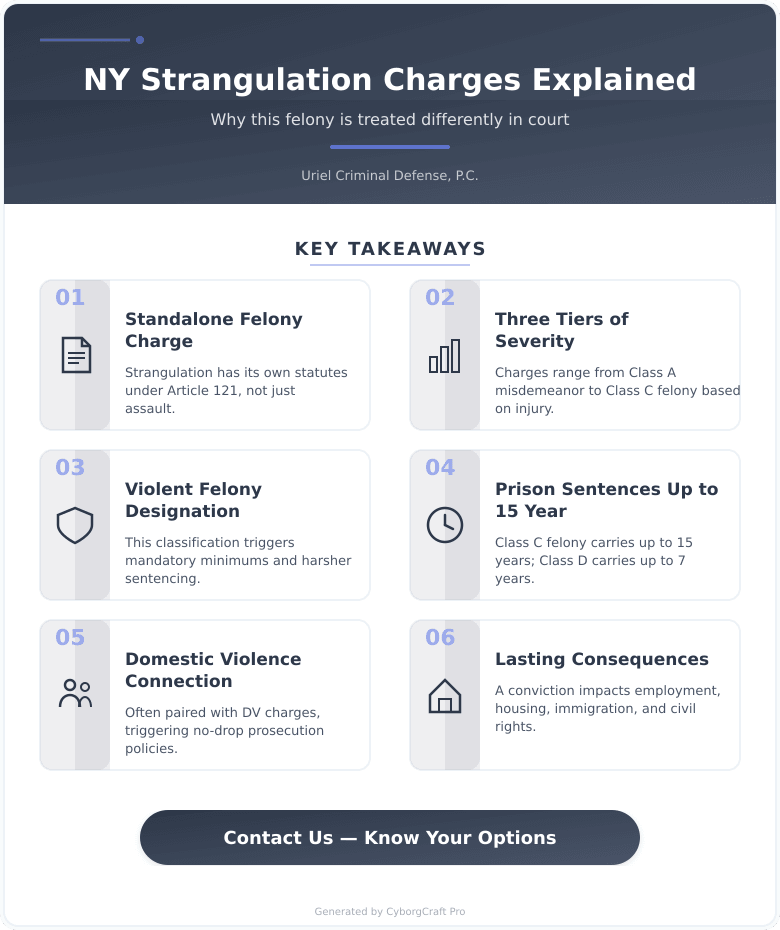
New York Penal Law sections 125.12 and 125.13 define two degrees of vehicular manslaughter. Second-degree (a class D felony) applies when a person causes death while driving drunk, drugged, or with a suspended license under certain conditions. First-degree vehicular manslaughter (a class C felony) adds aggravating factors - like a BAC of 0.18 or higher, having a prior conviction, or a child passenger in the vehicle.
Vehicular Manslaughter in the Second Degree (PL 125.12): A class D felony carrying up to 7 years in state prison for a first offense.
Vehicular Manslaughter in the First Degree (PL 125.13): A class C felony carrying up to 15 years in state prison when aggravating factors are present.
The National Highway Traffic Safety Administration reported alcohol-impaired driving fatalities at about 32% of traffic deaths in 2022, with similar figures in recent years. New York prosecutors are under significant public pressure to pursue these cases aggressively, and they do.
What Prosecutors Have to Prove - Every Single Element
Here is where many people get confused. A death on the road does not automatically equal a vehicular manslaughter conviction. Prosecutors must prove each element of the charge beyond a reasonable doubt. That is a high standard, and it is where defenses are born.
The core elements prosecutors must establish:
- The defendant operated a motor vehicle
- Another person died as a result
- The defendant was legally impaired at the time (or driving under a qualifying suspended license)
- The operation of the vehicle caused the death
Causation is often the most contested element. A death occurring near a vehicle during a DWI stop is not the same as a death caused by impaired driving. Prosecutors must connect the impairment to the fatal outcome - and that connection is not always clean.
The most common mistake we see is defendants assuming the charge is airtight because someone died. It rarely is.
Vehicular Manslaughter vs. Criminally Negligent Homicide: Which Charge Are You Actually Facing?
| Charge | Degree | Key Element | Prison Range (2025) | Best Defense Focus |
|---|---|---|---|---|
| Vehicular Manslaughter 2nd | Class D Felony | DWI/DWAI + death | Up to 7 years | Impairment level, causation |
| Vehicular Manslaughter 1st | Class C Felony | Aggravated DWI + death | Up to 15 years | BAC accuracy, aggravating factors |
| Criminally Negligent Homicide | Class E Felony | Criminal negligence + death | Up to 4 years | Standard of negligence, foreseeability |
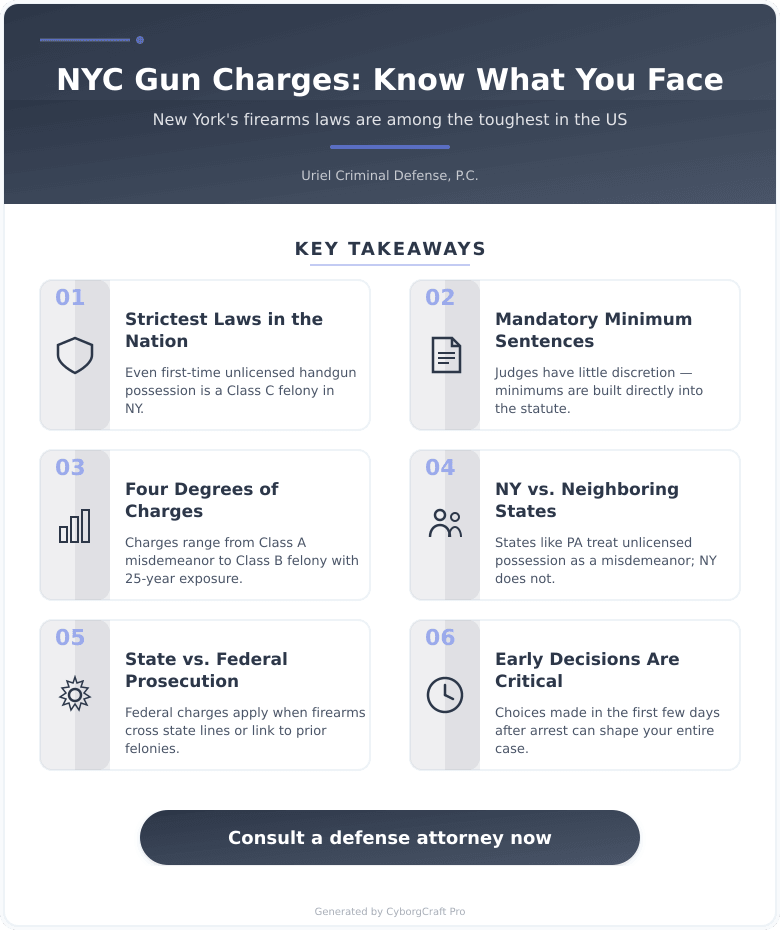
| Aggravated Vehicular Homicide | Class B Felony | Reckless driving + prior + death | Up to 25 years | Recklessness standard, priors validity |
Where prosecution succeeds: When BAC evidence is clean, witnesses corroborate impaired driving behavior, and causation is direct and documented.
Where prosecution struggles: When chemical testing procedures were flawed, when another driver or road condition contributed to the crash, or when the stop itself was unlawful.
The verdict: The specific charge matters enormously. A skilled defense attorney challenges both the charge level and the underlying evidence - often achieving reduced charges or dismissals before trial.
Thinking about this for your situation? Let us talk. Contact us and we will walk you through your options - no pressure, no obligation.
Where Defenses Are Actually Built
Good defense work in vehicular manslaughter cases is not about denying that something terrible happened. It is about holding the prosecution to their legal burden. Here is where real defense leverage exists in 2025 New York cases:
Chemical Test Accuracy: Breathalyzer and blood test results are not infallible. Calibration errors, improper storage, chain-of-custody gaps, and medical conditions can all affect BAC readings. Recent data from New York court records shows that chemical test challenges succeed more often than most defendants expect.
Causation Disputes: If road conditions, another driver's actions, or a sudden medical event contributed to the crash, the causal link between impairment and death weakens significantly.
Constitutional Violations: If police lacked reasonable suspicion for the traffic stop, evidence collected afterward may be suppressed. A suppressed BAC result can collapse a vehicular manslaughter charge entirely.
Witness Credibility: Eyewitness accounts of impaired driving are often inconsistent, particularly in chaotic post-accident scenes. Cross-examination of these witnesses is a core defense tool.
Your Vehicular Manslaughter Defense Action Plan
- Step 1 - Say Nothing Without Counsel: Anything you say to police after an accident can be used against you. Exercise your right to remain silent immediately and contact an attorney.
- Step 2 - Preserve All Evidence: Dashcam footage, phone records, witness contact information, and accident scene photos are time-sensitive. Collect and preserve everything possible.
- Step 3 - Challenge the Chemical Evidence: Request all documentation related to breathalyzer calibration and blood sample handling. Errors here can be decisive.
- Step 4 - Reconstruct the Accident: An independent accident reconstruction professional can challenge the prosecution's narrative about how and why the crash occurred.
- Step 5 - Evaluate All Plea Options: Depending on the strength of the evidence, negotiating a reduced charge (such as criminally negligent homicide) may serve your long-term interests better than trial.
What to Bring to Your First Defense Consultation
- ☐ Copy of your arrest paperwork and any court documents received
- ☐ Any toxicology or chemical test results provided to you
- ☐ Names and contact information for potential witnesses
- ☐ Dashcam or surveillance footage if available
- ☐ Your driving history and any prior record information
- ☐ Documentation of any medical conditions that could affect test results
Key Takeaways for Defendants in 2025
- Prosecutors carry a real burden - every element must be proven beyond a reasonable doubt, including causation
- Chemical test evidence is challengeable - calibration errors and procedural failures create real defense opportunities
- The charge level matters - first-degree vs. second-degree vehicular manslaughter is a significant difference in exposure
- Time is critical - evidence disappears fast and early attorney involvement shapes case outcomes
- Free consultations are available - you can get straight answers before making any decisions
Frequently Asked Questions
What is the difference between vehicular manslaughter and vehicular homicide in New York?
New York uses the term vehicular manslaughter rather than vehicular homicide, but aggravated vehicular homicide (PL 125.14) is a separate, more serious charge. Aggravated vehicular homicide applies when reckless driving combines with a prior DWI conviction, multiple deaths, or other aggravating circumstances and carries up to 25 years in prison.
Can vehicular manslaughter charges be reduced or dismissed in New York?
Yes - charge reductions and dismissals occur regularly in New York vehicular manslaughter cases when defense attorneys successfully challenge the evidence. Common outcomes include reduction to criminally negligent homicide or DWAI charges, particularly when chemical test evidence or causation is disputed.
How does New York prove impairment in a vehicular manslaughter case?
Prosecutors use chemical test results, field sobriety test observations, officer testimony, and witness accounts to establish impairment. Each of these evidence types has known vulnerabilities that experienced defense attorneys target during pre-trial motions and cross-examination.
What happens if the accident was partly caused by road conditions?
If road conditions, a mechanical defect, or another driver's actions contributed to the fatal crash, the causation element of vehicular manslaughter becomes significantly harder for prosecutors to prove. An independent accident reconstruction analysis can document these contributing factors and form a core part of your defense.
How long does a vehicular manslaughter case take in New York courts?
Most felony cases in New York take 12 to 24 months from arraignment through resolution, depending on court congestion and case complexity. Cases resolved through plea negotiations often conclude faster than those proceeding to trial.
Is a free consultation available for vehicular manslaughter charges?
Yes - Uriel Criminal Defense, P.C. offers free consultations for vehicular manslaughter and related criminal defense matters. Early legal guidance is critical in these cases because evidence preservation and pre-arraignment strategy can significantly affect outcomes.
Your Next Step Starts Here
Vehicular manslaughter charges in New York are serious, but they are not undefendable. Prosecutors have to prove every element of their case, and the law gives you real rights throughout that process. The question is whether you have someone in your corner who knows exactly where to push.
Uriel Criminal Defense, P.C. handles criminal defense cases across Brooklyn, Queens, Manhattan, the Bronx, and Staten Island. If you are facing charges in New York City or the surrounding areas, call us now at 833-733-4448. We are available 24/7 for emergencies. Ready to take the next step? Contact us today for straight answers and real options - before more time passes.
This content is for informational purposes only and does not constitute legal advice. Every case is different. Contact a licensed New York criminal defense attorney to discuss your specific situation.